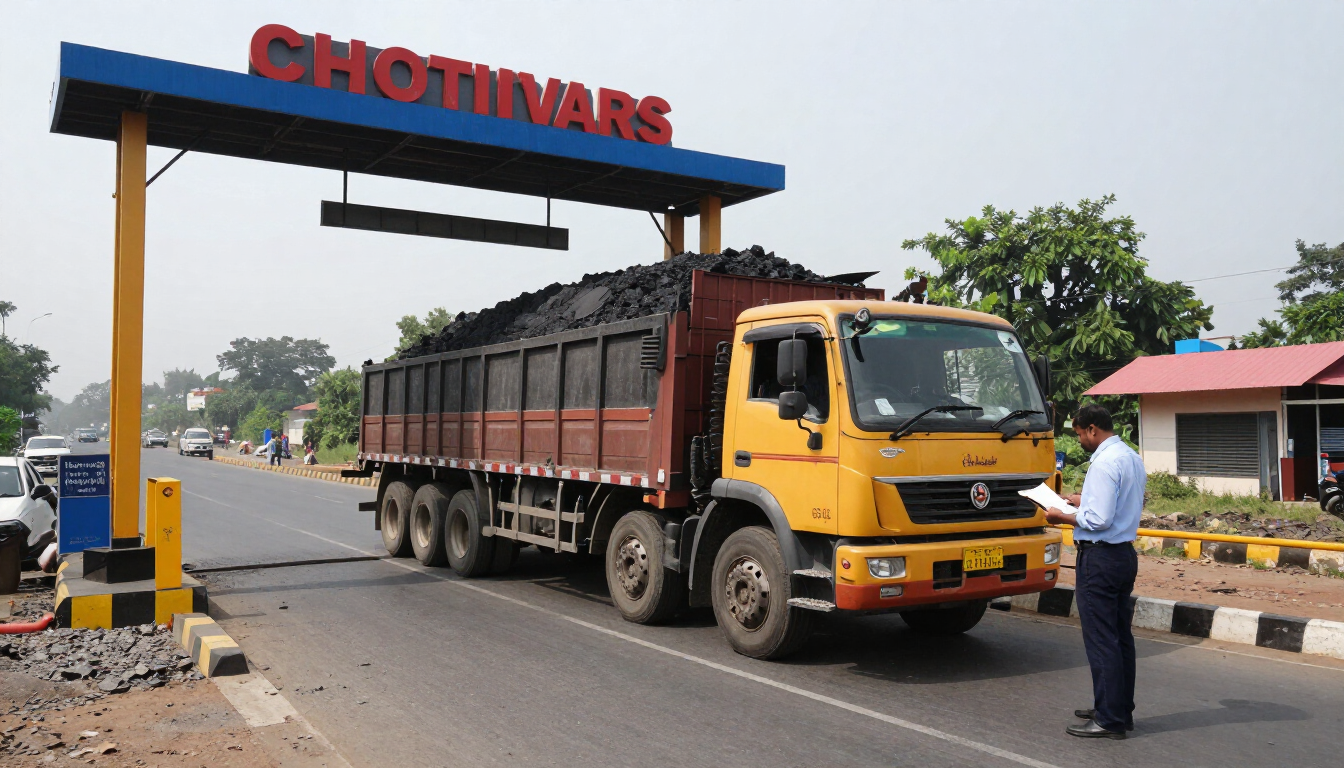
Ask any truck driver operating in Odisha what keeps them up at night, and the answer is rarely the road itself. It is the checkpost.
A stoppage at a weighbridge or police checkpost, especially if the vehicle is even marginally overloaded or a document is missing, can mean hours of delay, a fine of several thousand rupees, and in some cases the vehicle being detained until the operator comes in person. On a tight freight schedule, one detention can cascade into missed trips, unhappy clients, and deductions on the payment advice.
This guide is for truck owners, fleet managers, and drivers operating in Odisha's coal transport sector. It covers what documents must be in the vehicle at all times, what the law says about overloading, and what to actually do when your truck gets stopped.
Documents Every Coal Truck Must Carry
The Motor Vehicles Act and GST regulations together create a comprehensive document requirement for commercial trucks in India. All of the following must be present in the vehicle, in physical or digital form (DigiLocker is accepted for RC, DL, and insurance):
Registration Certificate (RC) — Vehicle must be registered for commercial use. For hired vehicles, the RC must be in the name of the actual owner, not the transporter.
Commercial Driver's Licence (CDL) — The driver must hold a valid Heavy Motor Vehicle (HMV) or Transport Vehicle licence. Expired licences are one of the most common causes of detention.
Fitness Certificate — Issued by the RTO. New transport vehicles get a longer initial validity, after which it is renewed yearly (and more often for older vehicles). Check the exact validity with your RTO. If expired, the vehicle is unfit to operate and the fine is substantial.
Insurance (Third Party at minimum) — Comprehensive insurance is advisable but only third-party is legally mandatory. Expired insurance means the vehicle cannot legally be on the road.
Pollution Under Control (PUC) Certificate — Valid PUC is required. For diesel HMVs, validity is typically 3 or 6 months depending on the state.
E-Way Bill — For coal movement above ₹50,000 in value, a valid e-way bill generated on ewaybillgst.gov.in must accompany the goods. The bill must match the vehicle number, consignor GSTIN, consignee details, and the goods description. Any mismatch is a GST compliance issue.
Permit — State permit for intra-state operations or national permit for inter-state. Odisha has a permit system for commercial vehicles; operating without a valid permit invites detention and fines.
Loading Slip / Weigh Bridge Receipt — From the mine or loading point. Shows the loaded weight of the vehicle. This is your first line of defence against overloading disputes.
The Overloading Problem in Coal Transport
Overloading is endemic in the coal transport sector across India, and Odisha is not exempt. The economic incentive is obvious: more coal per trip means more gross revenue per trip. But the risks are severe and compounding.
Under the Motor Vehicles (Amendment) Act 2019, overloading fines were dramatically increased. A vehicle carrying more than its permitted Gross Vehicle Weight (GVW) faces a fine of ₹20,000 for the first tonne over the limit, and ₹2,000 for every additional tonne. For a 25-tonne truck loaded to 30 tonnes, that is ₹30,000 in fines — potentially exceeding the freight revenue of the trip.
Beyond fines, repeated overloading violations can result in permit cancellation and blacklisting with corporate clients who run their own compliance checks.
The sensible approach for any fleet is to load to 95–98% of permitted GVW at the mine weighbridge. This allows for variance without breach, and the loading slip protects the driver at any checkpost down the road.
What To Do When Your Truck Is Stopped
Step one: stay calm. Aggressive behaviour at a checkpost escalates situations that are otherwise routine.
Step two: present all documents clearly and in order. The faster the checking officer can verify compliance, the faster the release.
Step three: if there is a genuine document issue — an expired fitness certificate, a mismatched e-way bill — do not argue at the checkpost. Call the fleet manager or company immediately. Most issues can be resolved remotely (a corrected e-way bill can be generated from the GST portal within minutes).
Step four: if a fine is imposed, pay it against proper receipt. Never pay without a receipt. The receipt is your protection against double-charging and is evidence if you wish to contest later.
Step five: log the incident. Every detention, every fine, every document issue should be recorded by the fleet manager. Patterns reveal systemic gaps — an insurance policy that keeps expiring because nobody set a renewal reminder, a driver whose HMV licence is near expiry, a route with a consistently aggressive weighbridge.
How Digital Tools Help
Most document expiry-related stoppages are preventable with basic calendar management. A spreadsheet tracking expiry dates for every vehicle's RC, fitness certificate, insurance, PUC, and permit — with 30-day advance alerts — eliminates most surprise detentions.
The e-way bill system (ewaybillgst.gov.in) allows real-time generation and, importantly, vehicle number amendment if the truck changes mid-route due to breakdown. Drivers should know their transporter's GSTIN and have the office number to call for e-way bill generation or amendment.
RELATED READING
For freight inquiries: accounts@mishraheavycarriers.com | +91 9938121704
Keywords & Tags
Need a freight quote for your coal or bulk goods?
Get a transparent, GST-compliant quote from Mishra Heavy Carriers™ in minutes.
Get a freight quote